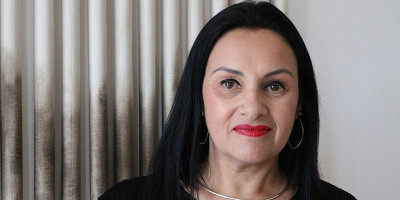
Tereza de Arruda is an art historian and curator and has worked with various international institutions since the 1990s. She has been an advisor to the Havana Biennial since 1997, co-curator of the Kunsthalle Rostock since 2015, as well as the co-curator of the Curitiba International Biennial between 2009 and 2019. With a keen interest in the work of Sigmar Polke, she curated the exhibition Sigmar Polke Capitalist Realism and other illustrated histories at the Museu de Arte de São Paulo (MASP) with the works by Polke from the collection Kunstraum am Limes, in 2011. De Arruda also curated Sigmar Polke – The Editions at me Collectors Room Berlin in 2017, which was accompanied by a publication at König Verlag.
Scholarship 2021 - Tereza de Arruda, Day by Day – Sigmar Polke Starts An Away Dialogue
Tereza de Arruda, Day by Day – Sigmar Polke Starts An Away Dialogue
In 1975 Sigmar Polke participated in the XIII Bienal de São Paulo and received his first international award the Prize for painting of the city of São Paulo.The German participation at the biennial had Evelyn Weiss as commissioner, who also invited Georg Baselitz and Blinky Palermo to represent Germany in São Paulo. In the official catalogue, she justifies her choice as following: “Three artists, three basically divergent positions in relation to painting. This is already noticeable through the adopted technique: one paints with the fingers (Baselitz), the other uses sprays and collage (Polke), the third party uses exclusively the brush (Palermo).”[1] She specifies her choice of Polke: “Polke has a very unorthodox and adamant approach to contents and forms of expression, while his behavior closely linked to the environment and society marks his works, in which he also often collaborates with his friends and acquaintances.”[2]
As a young artist Sigmar Polke traveled to São Paulo to participate in the Biennial. He was faced with a country amid military dictatorship camouflaged by rhythm, beauty and tropical spirit. The local art scene employed artifice to defend its freedom of expression. Polke already displayed and defended remarkable characteristics of his being and artistic existence. With curiosity, self-confidence, and irony, he appeared in São Paulo with the casualness of a flaneur in his appreciation of the local society accentuated by a spirit of inquiry and the critical sense of a traveling artist to capture, record, and conserve his local experience.
One of the testimonies of this experience is the 16 mm film he produced, Sigmar Polke: São Paulo, 1973-75 (28 min.). Its soundtrack is an extract from the publication A Grain of Mustard Seed (The Awakening of the Brazilian Revolution) by Márcio M. Alves published in 1973. This provides proof that Polke was always aware of the contexts he was entering.
After this initial encounter with South America, Sigmar Polke never went back to Brazil. On the other hand, the involvement in the international art scene was extensive, cultivated, and established a global dialogue. Part of my interest in this research is to investigate how aware Sigmar Polke was of the local art scene and the corresponding artistic movements, as well as the significance of the presentation of his work in such a context. 45 years after this episode, the temptation to create a dialogue between Sigmar Polke and the protagonists of the local art scene emerges as a face-to-face coexistence. This should be analyzed today from both a temporal and art historical perspective, with the knowledge that Sigmar Polke cultivated a strong relationship with his artists colleagues, as described by Evelyn Weiss above.
Polke himself was a keen and critical observer of the miraculous period of post-war progress captured by his experiences, eyes, and lens. This miscellany was the basis of his archive, which was continually recombined in his vast creative production and shared with both his friends and in the context of art. “Polke’s camera accompanied him on all his trips, exhibition openings, activities among friends and shared games. Life was a performance. And like other artists, he was always concerned with rediscovering artistic production and practice. One formative influence was the transference of criticism of the bourgeois order to the individual’s way of life, so that art, the revolutionary zeitgeist, and everyday life became mutually permeable.”[3]
This scholarship will provide me with the opportunity to deepen my research on the resonance of Sigmar Polke’s work in Brazil in two ways: based on the exhibitions in which he participated and the close dialogue of his own production with the work of protagonists in contemporary Brazilian art.
Additionally, for the research involved in this scholarship, I will be considering the perspective of Sigmar Polke’s participation in the 14th Havana Biennial. From this perspective I will be analyzing the reaction and possible constructive dialogues to be developed from a confrontation with the work of Sigmar Polke in one of the last communist countries in the world. Polke often stressed the conflict of the human being metaphorically crushed between the condition of the State and their own reality and phantasy. To a certain extent, this tension plays a subtle and ironic role in his work. Sigmar Polke uses magical formulas and metamorphoses as a form of expression, alternating between trivia and high-brow culture, moving among politics, economics, science, beliefs, social behavior, and other areas. In this universe, he spread ‘capitalist realism’ in opposition to ‘official’ socialist realism that existed in East Germany from the end of the Second World War until 1989. Cuba is one of the last reminiscences of this political heritage. The Havana Biennial is one of the few cultural platforms that is a relevant player for intercontinental dialogue and an understanding of the past, current, and future perspectives of the cultural relationship with Cuba.
[1] Evelyn Weiss, Alemanha, in exh. cat. XII Bienal de São Paulo, São Paulo 1975, p. 26.
[2] Ibid. (transl. amended).
[3] From the press release of the exhibition Sigmar Polke and the 1970s, Nov 4, 2018 – Mar 10, 2019, Museum für Gegenwartskunst Siegen (transl. amended).